
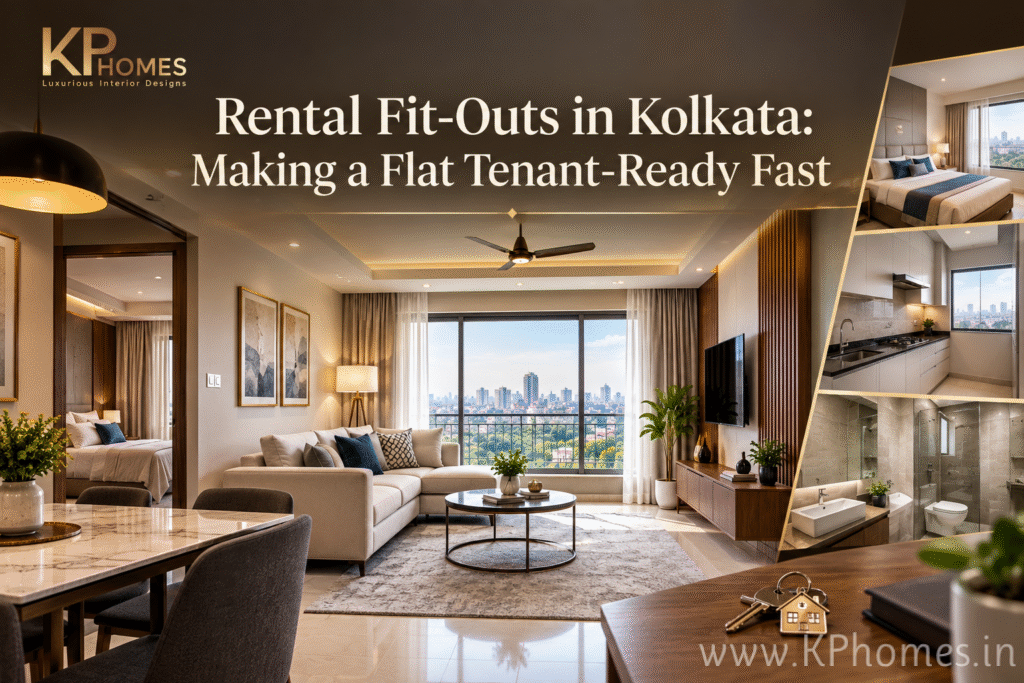
An empty flat sitting on the rental market can mean lost rental income, while a clean, functional and well-presented property may be easier to market to prospective tenants. This can be particularly relevant for NRI owners and investors who may not have the time or local presence to prepare a Kolkata flat for rental.
A rental fit-out solves this but done well, it’s a very different exercise from designing a home you’ll live in yourself. Here’s how to think about it.
What Is a Rental Fit-Out, Exactly?
A rental fit-out is the process of preparing a flat to be functional, presentable and suitable for the intended tenant profile, with a focus on practical use, durability and efficient spending. It typically includes:
- Basic modular kitchen setup
- Wardrobes in bedrooms
- Neutral painting and minor civil repairs
- Functional lighting throughout
- Essential furniture (bed, sofa, dining set, study table)
- Curtains, and sometimes appliances like a geyser, chimney, or AC
The goal isn’t a showpiece home, it’s a clean, functional, appealing space that photographs well, shows well, and holds up to tenant wear and tear.
Why Rental Fit-Outs Need a Different Design Approach
Neutral over personal: A rental unit needs to appeal to the widest possible pool of tenants, not reflect one owner’s specific taste. Neutral tones, simple layouts, and universally likeable finishes may appeal to a broader range of prospective tenants than highly personalised designs.
Durability over indulgence: Materials need to withstand tenant turnover — scratch-resistant surfaces, easy-to-clean finishes, and furniture that holds up through regular tenant use and turnover, rather than premium finishes that show wear quickly.
Speed over perfection: Keeping the project timeline efficient can help reduce the period during which the property remains vacant. Rental fit-outs are typically planned around tight timelines, using pre-selected, readily available materials rather than custom, made-to-order pieces.
ROI-driven decisions: Spending should be evaluated against the target tenant, expected rental positioning, durability and overall project cost. A good rental fit-out plan is essentially a small investment case, not a design mood board.
Furnished vs Semi-Furnished vs Unfurnished: What Actually Rents Faster in Kolkata?
The right furnishing level depends on the property’s location, condition, target tenant and local rental demand. Semi-furnished and fully furnished homes may appeal to tenants looking for greater convenience, while some tenants may prefer unfurnished or minimally furnished properties. The decision should therefore be based on the specific micro-market rather than a one-size-fits-all approach. The right level of furnishing depends on your target tenant profile:
- Fully furnished — ideal for corporate tenants, short-term lets, and NRIs’ own family visits between rentals.
- Semi-furnished (kitchen, wardrobes, lighting, no loose furniture) — a strong middle ground that appeals to most family tenants while keeping upfront costs lower.
- Unfurnished — may suit tenants who already own furniture or prefer to furnish the property themselves.
A Practical Rental Fit-Out Process
- Property assessment — a walkthrough (in person or via video/photos for NRI owners) to identify what’s usable, what needs repair, and what’s missing entirely.
- Target tenant profiling — deciding whether you’re optimizing for corporate tenants, families, or students, since this shapes furnishing level and style.
- Scope and budget finalization — a clear list of what’s included, tied to a fixed budget and timeline.
- Execution — civil repairs, painting, modular kitchen and wardrobe installation, and furniture placement, typically completed faster than a full personal renovation since choices are pre-standardized.
- Staging and photography — styling the flat properly for listing photos, which materially affects how quickly it attracts serious inquiries.
- Handover for listing or leasing — the flat is ready to show, list, and rent out, often supported by property management for owners who aren’t locally based.
For owners who prefer a single point of coordination, a professional interior or fit-out team such as KP Homes can manage the scope, execution and handover as one coordinated process.
Why This Matters Especially for NRI Owners
For NRI and outstation owners, managing a rental fit-out remotely can be challenging when there is no local person available to coordinate contractors, purchases and property preparation. A local team can handle the fit-out and provide regular updates, helping the owner manage the process without being physically present.
Frequently Asked Questions
1.How much does a rental fit-out cost in Kolkata?
It depends on the flat size and furnishing level chosen, but semi-furnished fit-outs are generally more budget-friendly than fully furnished ones, since costs scale with the amount of furniture and appliances included.
2.How long does a rental fit-out take?
Rental fit-outs are typically faster than personal home renovations, since material and furniture choices are pre-standardized rather than custom. The timeline depends on the flat’s condition, scope of work, furnishing level, material availability and approvals. A straightforward fit-out may take a few weeks, while projects involving more extensive civil work or customisation can take longer.
3.Does furnishing a flat actually help it rent faster in Kolkata?
In most gated societies and professional-tenant-heavy micro-markets, Furnishing can make a property more convenient and marketable to certain tenant groups, but its impact on rental speed depends on the location, tenant profile, rental price and competing properties in the same micro-market.
4.Can I get a rental fit-out done without visiting the property myself?
Yes. With video walkthroughs, photo documentation, and a local project team managing execution, NRI and outstation owners can complete a rental fit-out remotely, similar to a full interior design project.
5.Should I fully furnish or semi-furnish my rental flat?
It depends on your target tenant. Corporate and short-term tenants may prefer fully furnished units, while many family tenants may be comfortable with semi-furnished flats that include just the kitchen, wardrobes, and lighting.